
















PROFILE: Avelino Bonifácio trades the glitz of government offices for the silence of the sea and admits that power does not blind him
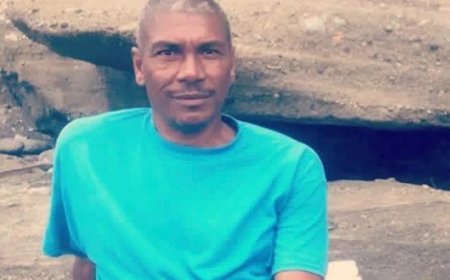
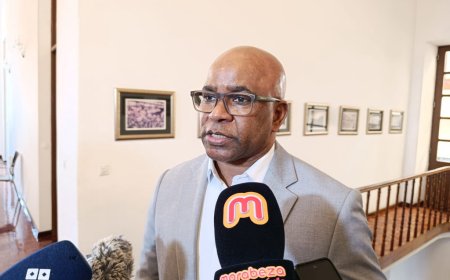
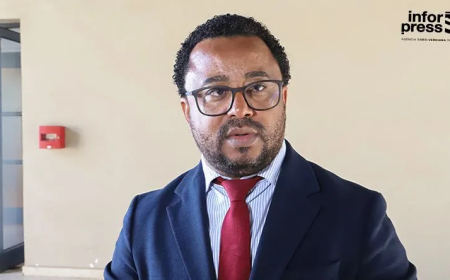
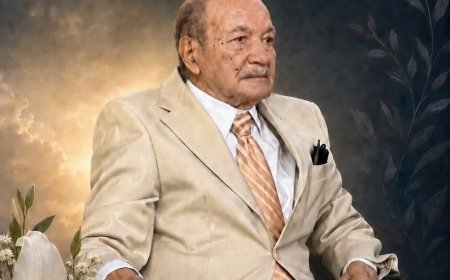
Economist Avelino Bonifácio Lopes, who now heads the Chief of Staff’s Office—this stubborn “Taurus” who traded the glamour of office for the silence of the sea—admits that life has taught him so much that power does not blind him.
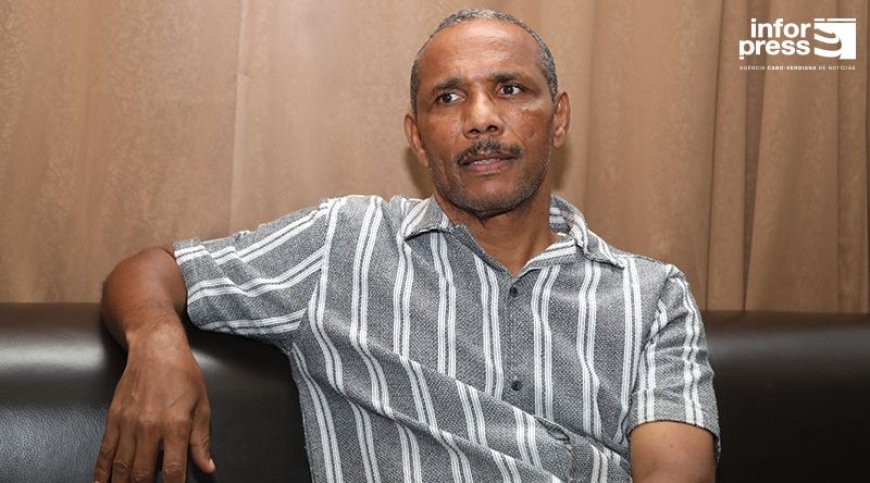
In this interview, sitting casually in his office at the Presidency of the Republic, Avelino Bonifácio Fernandes Lopes—his given name—talks a little about himself, his various lives, his joys, satisfactions, and aspirations; his barefoot childhood; the sea at age thirteen; and the nature of power—all in a very calm and serene tone of voice, punctuated by broad smiles, within the quiet confines of the Civil House.
Today, sitting at the heart of the Cape Verdean state apparatus as Chief of Staff to the President of the Republic—with a bachelor’s degree in economics and a master’s in international economic relations—Avelino carries in his skin and memory the dust, salt, and sweat of a background where daily survival was a victory.
Born on May 14, 1963, in Rebelo Baixo, in the parish of São Salvador do Mundo, this stubborn “Taurus” embodies in his persistence the exact reflection of his zodiac sign’s nature.
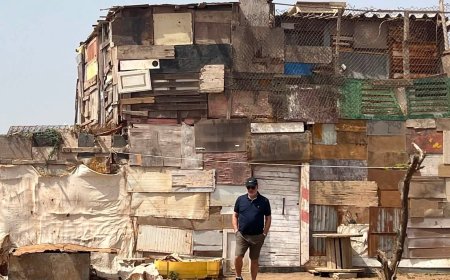
But what shaped the man he is today was, without a doubt, the harshness of a childhood spent amid the severe aridity of the deep interior of Santiago and the relentless work of a family of eight siblings—seven boys and one girl.
In this more intimate outpouring that reveals the other side of the person, it is clear that Avelino’s childhood memories are painful due to their raw realism—set in an isolated community where the first access roads did not arrive until the 1990s and water was dramatically scarce, having lived through the hardships of the 1960s and 1970s.
“I was a malnourished child—truly undernourished. In first grade, I must have been eight years old and weighed 18 quilos. I did every kind of work a man would do, but also every kind of work a woman would do… carrying water, gathering firewood, preparing food, ‘cotxi midjo’ (separating the corn from the chaff with rhythmic, forceful beats on the mortar), and cooking,” she described.
She recalls that, at less than ten years old, she was already working on public works projects established by the colonial government, alternating physical labor on the roads with her schoolwork.
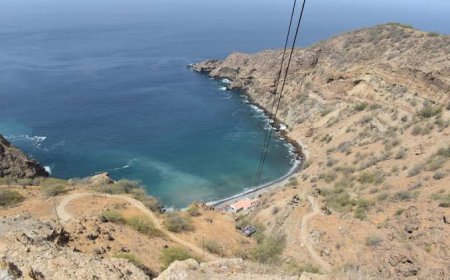
At age 11, she faced the dark predawn hours on foot, walking kilometers along invisible trails to fetch animal feed or carry five-kilo cans of lard balanced on her head from Assomada, and the sea—that blue giant she now embraces religiously every week—she didn’t get to know up close until she was 13.
His hunger for knowledge, however, was greater than the hunger on his plate, for when fourth grade seemed to be the end of the line in a community without horizons, a whole night of crying in the dark convinced his father to take him to Praia.
What followed were daily kilometers on foot to school in Picos, nightly studies after a full day of hard work, military service at the Jaime Mota barracks, and a plot twist worthy of a novel that culminated in a scholarship to the then-Soviet Union.
From Odessa to Kyiv, Avelino Bonifácio lived in Ukraine for six years, immersing himself in a world he now observes with immense sadness and frustration in light of the current conflict.
There, between classes in Russian and harsh winters, he traveled by train to the far reaches of the Soviet empire, from Chechnya to Crimea, passing through St. Petersburg and Minsk.
Imagine a young Cape Verdean, fresh from the heat of Santiago’s interior, spending his winter vacation skiing in the Russian mountains after a two-day train ride, or enjoying a summer vacation on the Crimean Sea.
This cosmopolitan background, shaped by his interactions with dozens of nationalities, has made him an open-minded man, capable of speaking Russian as naturally as he speaks of his Creole roots.
Upon his return to Cape Verde, his professional career took off rapidly, taking on positions such as Director-General of Trade, Secretary of State, and Minister of Economy, Growth, and Competitiveness, in addition to a long career as an international consultant that took him to dozens of countries.
However, his time in government left him deeply disillusioned.
“It wasn’t the best professional experience I’ve had. I thought a minister had more power than he actually does… I realized that not everything is what it seems. Decisions aren’t always made by the people who appear to be making them. The profession I’ve enjoyed most was consulting, because it gives me complete freedom,” he confessed.
A fierce critic of flattery—which he considers a reflection of those who lack character, self-esteem, or principles—and of the “virtual world” in which the powerful often live surrounded by sycophants, Avelino chose to take refuge in what is real and tangible.
He never wanted anything to do with partisan activism, preferring to keep the moral line of his conscience intact and opting for the silence of his morning swim, where he confesses that he solves the most complex problems with his eyes closed, floating on his back, rather than in the cold corridors of power.
Out of the spotlight, Avelino is a man of strong bonds who has lived with his lifelong partner for over 30 years in a large, blended family with five children—a family managed without a marriage certificate, but with the solidity of someone who believes that what matters is substance, not bureaucracy.
In love, he describes himself as practical and guided by reason, without much romantic flourish; in his free time, besides his hour-and-a-half morning walk and swimming on weekends, he finds himself back in the kitchen.
A passion for cooking that goes way back, since at the age of seven he was already cooking to feed his father on the job sites and his family in the fields.
“I like to cook, but when you have a wife at home, cooking gets difficult, because she’s always finding fault… I like food that’s very well seasoned, with strong, bold spices mixed with vegetables,” he said.
Avelino Bonifácio’s life is also marked by the humor of minor mishaps; he proved to be precocious in matters of the heart, as by age 12 he was already pursuing romantic conquests, and in other matters, he always maintained the same boldness.
He recounts that he had a suitor who, after months of courtship, set the exact date and time for him to say “I do,” but at the eleventh hour, his mother sent him to do a chore, which caused the date to fall through and the relationship never to materialize—a story he laughs heartily about today when he runs into her on the street.
And then there’s the famous story of the childhood photograph, when, about 12 years ago, he was about to be honored by the Fundação Infância Feliz (Happy Childhood Foundation), chaired by former-first lady Adélcia Pires, alongside historical figures such as Aristides Pereira, Pedro Pires, and António Mascarenhas Monteiro, as part of a select group of poor children who rose to the top of the nation.
He explained that the requirement was simple to meet—all he had to do was submit a childhood photograph—but since the first photo he ever had taken was at age 12 for his ID card, and the only copy had been sent to a brother who had emigrated, the tribute ultimately fell through.
Today, Avelino still jokes about it and says he hasn’t quite forgiven his brother for that postcard lost in time.
Anyone who sees him with this background shouldn’t expect a man of great pomp, for Avelino unashamedly admits that he has little social life and is a terrible dancer.
Even so, amid get-togethers with longtime friends and coffee-shop chats, he has never lost his down-to-earth manner or his ability to listen to those he meets, always preferring the simplicity of his own people to the salons of high society.
However, looking back, Avelino Bonifácio doesn’t need old photographs to prove who he is, for the frail 18-kilo boy from Rebelo Baixo built, step by step, through sheer stubbornness and reason, a luminous legacy.
He is, above all, a man who has never forgotten where he came from, knowing exactly who he is when the mirror reflects the ordinary citizen, far from the spotlight.